Comparison Prompts Are the Most Competitive Territory in AI Search (2026 Analysis)

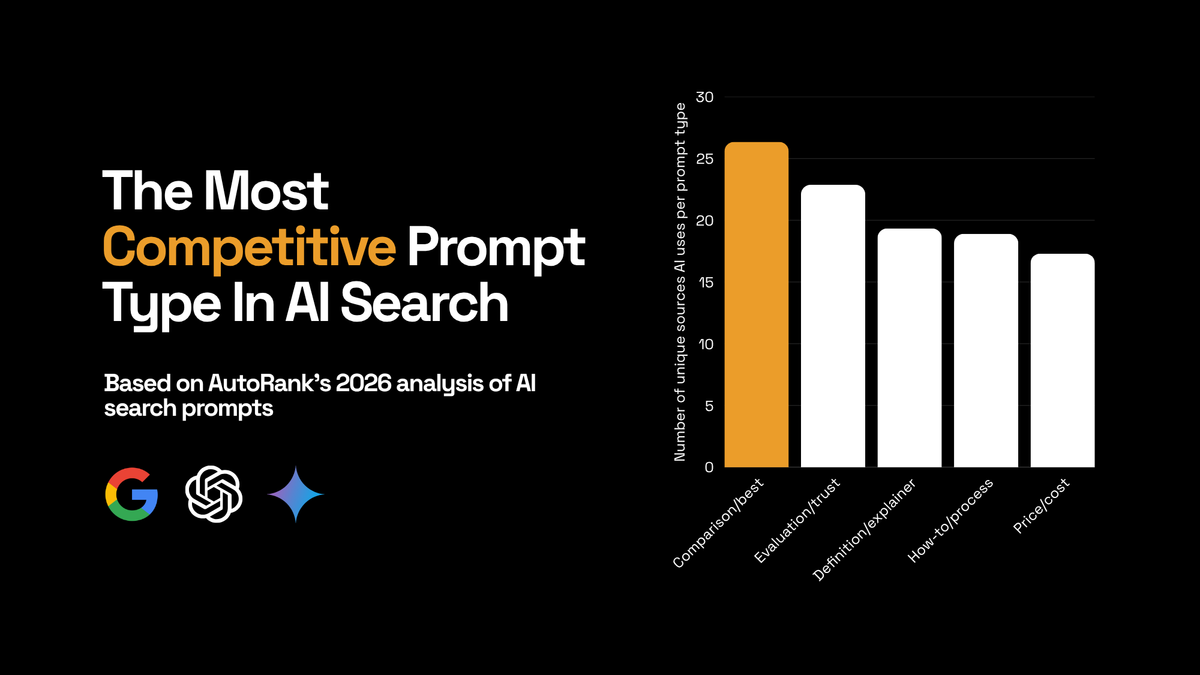
When someone is looking for running shoes and asks ChatGPT "what are the best running shoes right now?" or "should I choose Nike or Adidas for my next pair of running shoes?" AI pulls information from significantly more sources than for almost any other type of prompt.
That is what data from AutoRank's own analysis of Swedish AI search prompts in 2026 shows.
What the Data Says
In our analysis, comparison prompts had an average of 26.35 unique cited domains per prompt – the highest of all prompt types we analyzed.
For comparison:
- Evaluation/trust: 22.87
- Definition/explainer: 19.34
- How-to/process: 18.90
- Price/cost: 17.30
The analysis was based on 68 comparison prompts with a total of 23,972 citations.
Compared to how-to prompts, the competitive surface is almost 40% broader – and that is directly reflected in how difficult it is to appear in this type of AI response.
Why Are Comparison Prompts Different?
When someone asks "how do I return a pair of shoes?" there is a straightforward answer. But when someone asks "which running shoe is best for me?" there is no objectively correct answer – it depends on foot type, running style, budget and preference.
That means AI needs to pull information from more and broader sources to give a nuanced answer. It cites comparison sites, independent reviews, industry articles and expert sites. That is why the competitive surface is so much broader for comparison prompts and why having a well-optimized product page simply is not enough.
What This Means in Practice
For comparison prompts, you are competing against more types of pages and more domains at the same time. Appearing in independent reviews, comparison sites and industry articles is directly decisive for whether AI chooses to recommend you when someone asks a comparison prompt in your category.
Comparison prompts are also often the most purchase-intent driven prompts. Someone asking "should I choose Nike or Adidas for my next pair of running shoes?" is significantly further along in the buying journey than someone asking "what is the difference between road and trail running shoes?". Appearing in those prompts is about reaching customers who have already decided to buy – they are just looking for who to buy from.
Who Wins in Comparison Prompts Today?
The brands that appear in AI responses for comparison prompts today are those that combine regularly publishing their own industry-relevant content – making it easy for AI to understand what they offer – with a strong presence in independent sources such as industry articles, review sites and comparison services.
How AutoRank Helps You Appear in Comparison Prompts
The first step is understanding how you appear today when your potential customers ask comparison prompts in your category. Are you being recommended? For which prompts? And which competitors are being recommended instead?
In AutoRank you define the comparison prompts you want to monitor – and then the tool handles the follow-up for you automatically every day. You get a clear picture of your mention rate and share of voice compared to your competitors, and can review each individual prompt in detail. If you spot a comparison prompt where no competitor appears yet, that is your best opportunity to take position quickly before anyone else does.
With those insights as a foundation, you can go straight to AutoRank's Content Center. There you get help creating industry-relevant content specifically tailored to increase the likelihood of being cited for the exact comparison prompts you want to appear in – so that data does not just stay as insight, but gets turned into actual visibility.
The simplest way to win comparison prompts in the AI era is to make it easy for AI to understand what you offer and why you deserve to be part of the answer. AutoRank helps you get there – step by step.
Sources:
AutoRank (2026). Internal prompt analysis of Swedish AI search queries. autorank.ai